
Standing Firm for Africa's Big Cats
At Barefoot Safaris, we have always believed that the wild belongs to the wildlife. The great cats of Africa—lion, leopard, cheetah, and their global relatives—are symbols of strength, balance, and natural harmony. They inspire travellers, sustain ecosystems, and define the very landscapes that we are privileged to guide our guests through.
But today, those same animals are facing one of the most profound crises in modern conservation. And we at Barefoot Safaris feel not only compelled—but morally obligated—to take a stand.
Across South Africa, big cats are being farmed on an industrial scale. This is not conservation. This is commercial exploitation masquerading as wildlife management. South Africa is currently the world’s largest exporter of live big cats and their body parts, feeding a global market that thrives on demand for trophies, bones, skins, and so-called “luxury” items. The result is an industry spiraling far beyond any meaningful control.
Conservative estimates suggest that more than 10,000 lions are being kept on South African farms today. These lions—born into captivity, handled from infancy, and denied the dignity of a natural life—exist solely to be petted, walked with, bred, traded, or ultimately shot by paying trophy hunters. Alongside them, government figures indicate the presence of more than 600 captive tigers, a species not native to Africa at all. The true number is likely higher, because there is no mandatory system for tracking births, deaths, transfers, or breeding of tigers within the country.
And it doesn’t stop with lions and tigers. Leopards and jaguars are also being bred and kept on these same farms, treated as interchangeable commodities for international trade. These cats—icons of wildness and solitude—are reduced to pawns in a commercial system that profits from every stage of their exploitation.
Most visitors to South Africa have no idea that the adorable cub they are bottle-feeding or the young lion they’re walking with may one day be sold into the trophy hunting industry or shipped abroad to supply a demand that places all big cat species at risk. By fueling markets in parts of Asia—regions where traditional medicines and luxury goods often use big cat derivatives—the industry encourages the poaching and trafficking of wild cats across the globe. Since it is nearly impossible to distinguish parts from one cat species to another, demand for tiger products spills over into demand for lion products, and so on. In this way, South Africa’s captive big cat industry is not only damaging its own conservation credibility—it is undermining global efforts to protect threatened big cat species.
In March 2024, there was a glimmer of hope. The South African Cabinet approved a Policy Position calling for an end to the commercial captive keeping of lions and for the closure of lion facilities. Shortly after, a Ministerial Task Team recommended voluntary exit programs for breeders and suggested that other big cat species should be included in a national phase-out plan.
But policy is only as strong as its implementation. To date, clarity is lacking—no timeline, no firm regulatory framework, and no guarantee that these recommendations will be enacted in full. A future for big cats cannot rely on half-measures. It requires decisive, uncompromising action.
A 2024 report by FOUR PAWS lays out clear, actionable steps—ones Barefoot Safaris fully supports:
Ban all commercial trade of big cats and their parts, both within South Africa and across its borders.
End the commercial captive keeping of big cats, including closing facilities, halting intensive breeding, and shutting down exploitative operations.
Phase out the entire industry with the goal of full closure by 2030.
Implement all relevant CITES regulations related to big cat protection.
Advocate internationally to ensure all big cats receive equal protection under global agreements.
These are not radical ideas. They are the bare minimum required to restore integrity to South Africa’s conservation landscape and to honour the values of true wildlife stewardship.
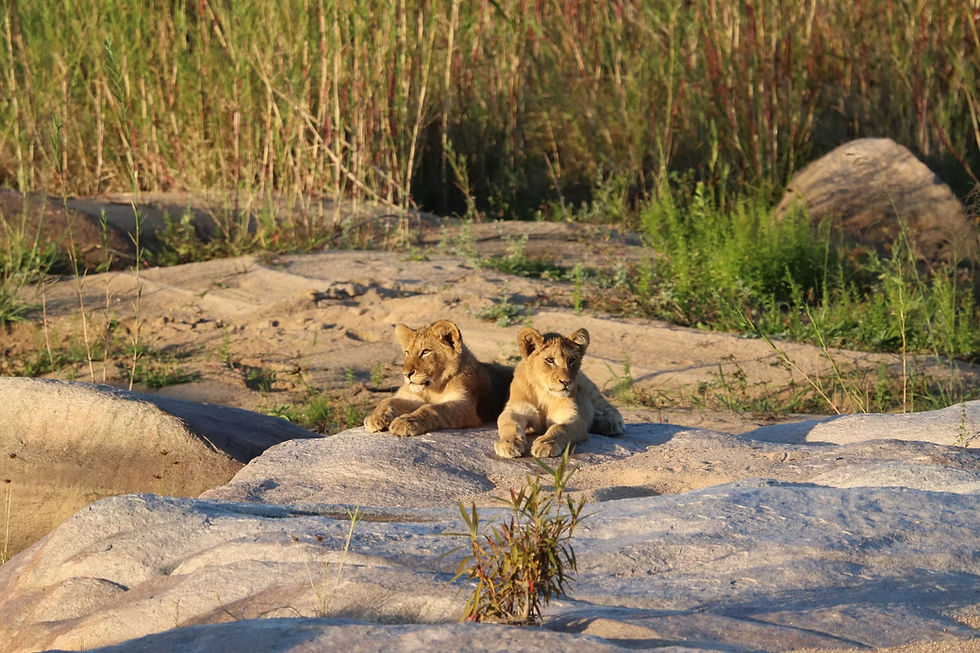
At Barefoot Safaris, we have spent decades guiding visitors across Africa’s wild spaces. We have witnessed firsthand how sensitive, complex, and extraordinary big cat populations truly are. We’ve seen the way a single lion pride shapes a landscape, the way a leopard influences the behaviour of every antelope, and how the roar of a free lion electrifies the air at dusk. This is what wild Africa means. This is what travellers come to experience. And this is what is at risk.
We stand firmly behind the global movement calling for an end to captive big cat exploitation. We believe in wild animals living wild lives, in real conservation driven by science and ethics—not profit. And we believe that the future of Africa’s big cats depends on every one of us speaking out.
We are committed to supporting efforts to ban all commercial trade in big cats and their parts from, within, and to South Africa. But we cannot do this alone. We need the support of responsible travellers, conservation-minded voices, and everyone who believes in a world where big cats roam free—not behind fences.
Together, we can push for a future where Africa’s big cats are valued not as products, but as living treasures. A future where safaris are defined by integrity, respect, and the profound privilege of meeting wildlife on its own terms.
Barefoot Safaris believes in this future—and we invite you to stand with us.


Comments